
What is a polymath?
A modern polymath is someone with breadth and depth of knowledge who can integrate across disciplines.
Imagine understanding something about how the environment works together in ecosystems and applying a concept from that understanding to how people collaborate together in the workplace. Thinking like that is a skill that can be developed, and that has been proven to produce innovation and creativity.
A polymath is a problem solver. Polymaths have a high tolerance for ambiguity. Polymaths are systems thinkers. They are adept at using what they've learned in other domains to solve complex problems in front of them. They repurpose what is already available. They can synthesize information from many different sources and connect it in new ways. Polymaths read more, and more broadly, and have a broad range of interests. Polymaths are leaders and collaborators.
Read more anecdotes below about modern polymaths making an impact by applying the breadth, depth, and integration across multiple fields of study.

Modern polymaths
Ornithology, aerospace engineering, & fluid dynamics
His design inspiration came, in part, from studying the ways in which birds in flight curled their wingtip feathers upward when seeking greater lift. Taking inspirations from the natural world, he spent much of the 1970s incorporating his observations of birds and existing research on vertical stabilizers, introducing the concept of winglets, small vertical extensions on the outer tips of wings. As a result, he designed winglets, upcurving wingtips that save about 5% of an airplane's fuel costs by reducing drag. His interdisciplinary approach combining biological observation, aerodynamic theory, and engineering design led to winglets now commonly used on commercial aircraft worldwide.
Modern polymaths
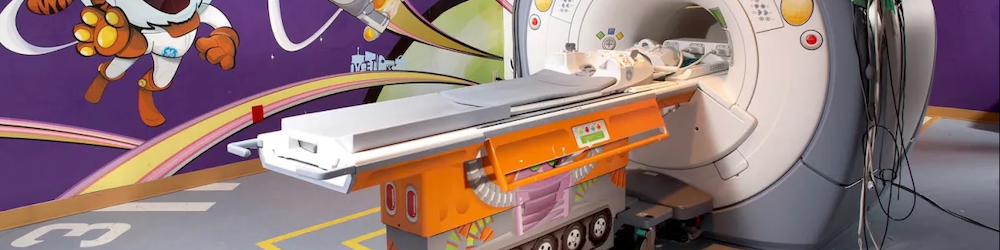
Theater, psychology, & industrial design
He combined theatrical set design principles to create immersive environments (like pirate ships or space adventures), child psychology research on how kids process fear and anxiety in medical settings, and industrial design expertise to redesign the MRI machines and rooms without compromising their medical functionality. His "Adventure Series" reduced the need for pediatric sedation from 80% to just 10% of cases, while also improving image quality since children remained still voluntarily rather than under sedation.

Modern polymaths
Computer science, linguistics, & cognitive science
She created ImageNet, a massive visual database that taught computers to recognize objects by mimicking how children learn through diverse examples. Her approach moved AI beyond narrow pattern matching to more human-like visual understanding, enabling breakthroughs in autonomous vehicles, medical imaging, and accessibility technologies for the visually impaired.
Modern polymaths
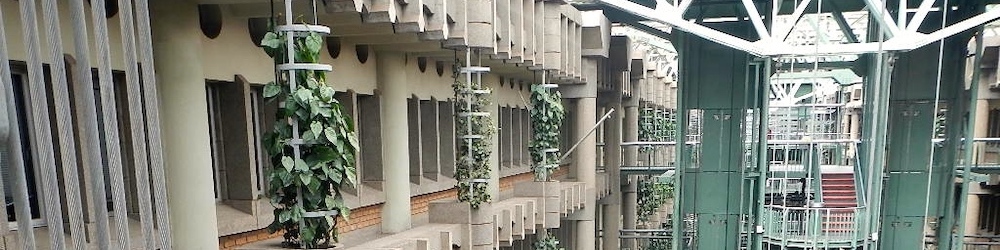
Entomology, architecture, & fluid dynamics
He combined insights from entomology about termite ventilation systems with architectural design principles and fluid dynamics engineering to create a building that maintains comfortable temperatures year-round without conventional air conditioning, reducing energy consumption by 90% compared to similar buildings.

Modern polymaths
Music, neuroscience, & rehabilitation medicine
He discovered that rhythmic auditory stimulation helps rewire damaged neural pathways for movement. Patients who couldn't walk could often march to a beat, and those who couldn't speak could sometimes sing. His protocols now help stroke survivors, Parkinson's patients, and others recover motor and speech functions by leveraging music's unique ability to access and reorganize brain networks.
Modern polymaths
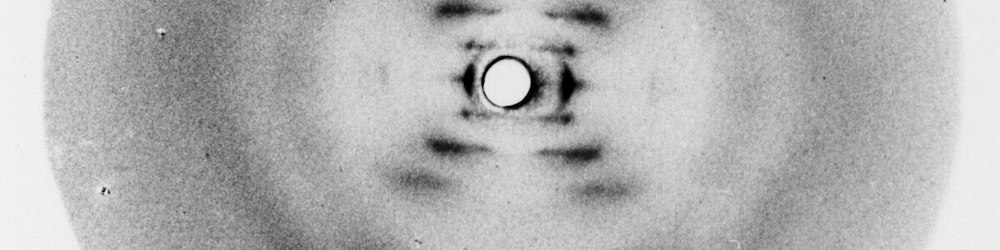
Biochemistry, crystallography, & molecular biology
Her "Photo 51" provided crucial evidence for DNA's helical structure and base-pairing rules. Though her contributions were initially overlooked, her interdisciplinary approach of using physical chemistry methods to solve biological questions became fundamental to modern structural biology and drug discovery.

Modern polymaths
Economics, behavioral psychology, & urban planning
He hired mimes to mock jaywalkers and reckless drivers (using theatrical psychology to create social pressure), implemented economic policies like car-free days and congestion pricing, and redesigned public spaces to encourage civic behavior. His approach reduced traffic fatalities by 50% and homicides by 70% by treating urban problems as fundamentally about human behavior rather than just infrastructure.